Top GAMES

A Little to the Left

Become A Fashion Designer

Friday Night Funkin vs Hatsune Miku

The Choicer Voicer
VOTED GAME
The Choicer Voicer 2

Sharks and Minnows
Rooftop Snipers 2

Eye Catching FNF








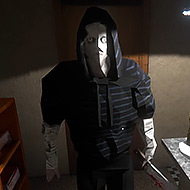
You take the first step onto a landing that looks exactly like the one behind you, and by the tenth flight you’ve stopped counting because The Stalking Stairs gives you no reason to. Nothing jumps out — the game just keeps handing you more stairs, and the climb becomes the only obstacle worth naming.
| Genre | Climbing / Endurance |
| Players | 1 (single player) |
| Session Length | Short, replayable rounds |
| Difficulty | Escalates the higher you climb |
The core idea is almost insultingly simple: you move forward and up, flight after flight, and the stairwell rarely changes shape enough to give you a landmark. Early in the climb this feels harmless, since the steps are wide and forgiving. That changes once the landings start repeating with no visual cue for how far you’ve gone, which is when you realize the game was never testing reflexes — it was testing how long you’d keep climbing without a payoff.
Beginners get this wrong fast: they treat the first flights like a warm-up and move faster than the stairs reward, clipping landing edges and sliding back down. The game punishes speed quietly, by resetting progress just enough to make you slow down and watch your footing.
One detail gives the whole thing away as a small, single-idea build rather than a polished climbing game: the same handful of stair textures and the same footstep loop repeat with no variation, so what you’re fighting by the twentieth landing is plain monotony. Players who talk about this style of climb elsewhere tend to call it a torture climb rather than a platformer, since positioning and patience matter more than reflexes here.
There’s no cutscene, no named threat, and no finish line described anywhere — you climb because the game keeps generating stairs, and you stop when you reach the top or decide you’ve had enough. With only one control scheme to learn, climb or fall, everything in The Stalking Stairs comes down to patience rather than skill, which is why it works as a short palate-cleanser between longer party rounds rather than a full session on its own.
Players chasing a quick high-score run get the most out of it, since no story investment is needed to quit after a few flights. Players who prefer a slower pace will notice the difficulty is really just their own attention wearing thin. The most honest criticism here is also the most common one: repetition this flat is divisive, reading as meditative to some and filler to others.
If you’re wondering about checkpoints, it doesn’t appear to offer any — a fall costs real progress, which is part of why sessions rarely stretch far before players push through or back out. That single, unforgiving rule is the closest thing this stairwell has to a system worth learning.
The Stalking Stairs never explains itself beyond the climb, and that restraint is the point: every landing looks like the last until your legs disagree, and that quiet, private dread is the only thing this stairwell ever delivers.