Top GAMES

A Little to the Left

Become A Fashion Designer

Friday Night Funkin vs Hatsune Miku

The Choicer Voicer
VOTED GAME
The Choicer Voicer 2
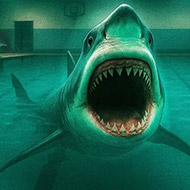
Sharks and Minnows

Rooftop Snipers 2

Eye Catching FNF








Sharks and Minnows gets straight to the action without making players work through a long introduction or complicated menu system. Once the game loads, the focus is immediately on the current round and the simple arcade challenge at its center. That direct approach makes it easy to understand what kind of experience to expect: short sessions, quick reactions, and a gameplay loop that encourages another attempt as soon as a round ends.
One of the defining characteristics of Sharks and Minnows is how little stands between the player and the action. There is no need to explore several screens before getting started, and the interface keeps its presentation focused on the game itself. This stripped-down structure works particularly well for a compact arcade title because it removes distractions and lets the player discover the pace naturally.
Instead of surrounding the core experience with extensive progression systems, complicated settings, or a large collection of separate modes, the game keeps things approachable. The result is an experience that can be understood quickly even by someone encountering it for the first time. A player can load the page, begin a round, see how the mechanics work through play, and decide almost immediately whether they want to continue.
Sharks and Minnows fits naturally into the category of quick arcade games designed around repeat attempts. The structure does not require a major time commitment, making it suitable for players who want something they can pick up for a brief session. A round can be approached as a small challenge on its own, while finishing one naturally creates an opportunity to try again and improve the result.
This repeatable format is important for lightweight browser games. Rather than depending on a long story or a large progression tree, the appeal comes from the immediate interaction. Each new attempt gives the player another chance to become more comfortable with the pace, react more confidently, and see how far they can get compared with the previous round.
A compact presentation can be an advantage when the main attraction is the gameplay rather than the surrounding features. Sharks and Minnows does not need a complicated visual framework to communicate its purpose. The smaller interface keeps attention on the active play area and avoids filling the experience with elements that are not essential to the round.
This also gives the game a straightforward character. Players looking for an elaborate arcade package with numerous unlockables and extensive customization may prefer something more substantial, but those who appreciate simple games can benefit from the opposite approach. The emphasis remains on starting quickly, understanding the challenge, and playing without unnecessary preparation.
Short browser arcade games often work best when they are easy to return to throughout the day. There is no expectation that a player needs to reserve a long period of time for a complete session. Sharks and Minnows follows that idea closely, offering a format that can fit into a few spare minutes just as easily as a longer sequence of repeated rounds.
The lightweight structure also makes the experience feel accessible. There are fewer systems to remember, fewer screens to navigate, and less introductory material to process before reaching the actual challenge. For players who prefer games that explain themselves through interaction, this can make the first session feel especially natural.
Rather than attempting to become a large, feature-heavy arcade package, Sharks and Minnows stays centered on its basic concept. The simplicity is part of its identity, allowing the player to concentrate on what is happening during the round instead of managing a collection of secondary mechanics.
That focused design can also make repeat play more appealing. Once the basic idea becomes familiar, attention can shift from learning the interface to reacting faster and making better decisions. The absence of unnecessary complexity means that the player can concentrate on the challenge itself, which is exactly what a compact arcade experience should provide.
Another strength of this format is its low barrier to entry. New players do not have to spend a significant amount of time studying instructions or learning a complicated progression system. The game presents a small, understandable challenge and lets the player learn through participation.
When a round finishes, starting another attempt feels like a natural continuation rather than a major restart. That quick cycle is what gives simple arcade titles much of their replay value. Even without a large collection of additional features, the desire to make another attempt can keep the experience engaging.
Sharks and Minnows is best understood as a focused arcade game rather than a sprawling title filled with extensive content. Its appeal comes from immediacy: the game loads, the round begins, and the player can concentrate on the challenge without passing through layers of menus or lengthy preparation.
For anyone who enjoys straightforward games with a quick rhythm and an uncomplicated presentation, that approach can be refreshing. Sharks and Minnows keeps its footprint deliberately small while giving players an experience that is easy to start, simple to understand, and convenient to revisit. There is no need to turn a short arcade session into a complicated commitment — click in, play a round, and decide whether you are ready for another attempt.