Top GAMES

A Little to the Left

Become A Fashion Designer

Friday Night Funkin vs Hatsune Miku

The Choicer Voicer
VOTED GAME
The Choicer Voicer 2
Sharks and Minnows

Rooftop Snipers 2

Eye Catching FNF








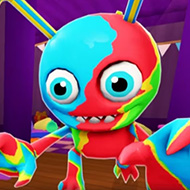
Taffy Tails 2 sounds like it should be slow and sticky, but it plays like a dead sprint against a wall of water that never stops climbing. The actual objective is collection under pressure: run out across the map, grab as many Brainrots as you can carry, and rush them back to base before the tsunami behind you closes the gap — and the game gives you almost no time to second-guess a route once you’ve committed to it.
Every Brainrot picked up in Taffy Tails 2 adds to a running total that only counts once it’s physically dropped off at base — dying or getting caught mid-run loses whatever’s currently being carried, which turns every trip into a real risk-reward decision instead of a simple fetch loop. Money earned from successful drop-offs buys upgrades like extra speed and higher carrying capacity, so early runs are usually short and cautious while later runs push much further from base once those upgrades are in hand.
The map rewards players who scout safe routes before committing to a full sprint, since dead ends discovered mid-chase are almost always fatal.
The chasing water in Taffy Tails 2 isn’t a single fixed threat — it escalates through named tiers, from Super Slow and Slow early on up through Medium, Fast, Lightning, and finally Beast, and each jump in speed changes what counts as a safe distance from base. A route that’s comfortable against a Slow wave becomes a guaranteed loss once Beast-tier water is behind you, which forces players to constantly recalculate rather than relying on muscle memory from earlier runs.
Underground gaps and other safe zones scattered around the map exist specifically for the moments a straight run to base won’t finish in time — ducking into one lets the wave pass overhead instead of catching the player directly, buying a few extra seconds to plan the next dash.
Movement in Taffy Tails 2 borrows heavily from obstacle-course platforming rather than a simple run-in-a-straight-line structure — players jump across gaps, weave between obstacles, and choose between a slower guaranteed path or a faster shortcut that’s easy to fumble under pressure. That shortcut-versus-safe-route tension is where most of the tension in a late-game run actually comes from, since a single missed jump while carrying a full load of Brainrots can undo several minutes of careful collecting.
Getting caught ends the run and drops whatever Brainrots were being carried at that moment — only Brainrots already delivered to base before the water catches up actually count toward your total.
Yes, underground gaps and other safe zones let the wave pass overhead regardless of which of the six tiers is chasing, though higher tiers close the surrounding distance faster, leaving a much smaller window to reach one in time.
Most experienced players prioritize speed early, since a faster run reduces exposure to being caught entirely, then shift toward capacity once routes to the farthest parts of the map are consistently survivable.
Taffy Tails 2 never lets a good haul feel finished until it’s actually banked at base — carry too much, cut it too close, and the water decides how the run really ends.