Top GAMES

A Little to the Left

Become A Fashion Designer

Friday Night Funkin vs Hatsune Miku

The Choicer Voicer
VOTED GAME
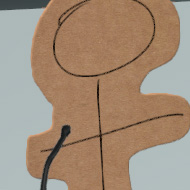
The Choicer Voicer 2

Sharks and Minnows

Rooftop Snipers 2

Eye Catching FNF








The Choicer Voicer 2 puts you behind a microphone and asks you to make quick voice decisions while keeping the round moving. The game builds its challenge around spoken choices, timing, and the way your selected Voice Packs shape what happens next. Instead of treating each prompt as a simple button press, you have to listen carefully, choose the right response, and keep your attention on the changing situation.
The central mechanic is straightforward: listen to the current prompt, use your voice or selected response to make a choice, and follow the resulting branch. Voice Packs give the game much of its personality because different packs can change the wording, tone, or presentation of the choices. Early in the game, the biggest adjustment is learning to recognize when the microphone input has actually registered your response rather than immediately speaking again.
Players often use the term voice pack when discussing the content that controls how choices sound and feel. That distinction matters because a custom pack can make familiar situations feel noticeably different without changing the basic choice structure. If you enjoy experimenting with audio and reactions, the game rewards that curiosity more than simply rushing through every prompt.
One small detail becomes obvious after several rounds: successful voice input has a rhythm of its own. There is usually a brief moment between giving a response and seeing the next consequence, and experienced players learn not to fill that gap with another command. By the time you are comfortable with the microphone setup, that pause feels less like delay and more like part of the timing.
Beginners commonly assume that speaking louder or repeating a choice will make recognition more reliable. In practice, a clean response at a steady pace is easier to manage than a rushed command, especially when several sounds are happening around the prompt. Players who prefer rhythm games tend to adapt quickly because they naturally watch for timing cues, while players who focus on narrative choices may need a few rounds to get used to the audio-first interaction.
Difficulty does not simply come from adding more choices. It also comes from making you process the prompt, decide what you want, and deliver the response without losing the flow. Once later situations begin demanding faster reactions, hesitation can be more damaging than choosing imperfectly. The game therefore rewards attention and consistency rather than raw speed alone.
A useful habit is to wait for the current prompt to finish before committing to a response. This becomes especially important when a Voice Pack uses similar-sounding phrases for different choices. Community discussions often describe clean, deliberate input as the difference between a smooth run and a string of accidental selections.
Creating or switching Voice Packs changes how you approach repeated sessions because familiar prompts can acquire a different character. A player interested in customization may spend more time testing voices and wording, while a player chasing consistent results will usually keep one setup and learn its timing. Both approaches work, but the second is generally easier when you are still learning how the game reacts to spoken input.
Microphone positioning also matters more than newcomers expect. A stable distance keeps your voice level consistent, while moving too close or too far can make otherwise clear responses less predictable. This is one reason players sometimes debate whether a missed choice comes from the game or from the microphone setup: small differences in input quality can feel like inconsistent recognition.
Once the basic setup is reliable, advanced play becomes less about changing equipment and more about controlling your delivery. Keep responses distinct, avoid talking over the prompt, and treat the short pause after recognition as intentional. By the time the later choice sequences arrive, those habits can make the difference between following the intended branch and triggering an unwanted response.
The game has a compact loop that makes individual moments easy to remember. One of the clearest player-only observations is the subtle change in pacing after a spoken choice is accepted: the next prompt arrives with enough separation that you can feel when the round has moved forward. That sound-and-pause pattern becomes familiar surprisingly quickly, especially for players who repeat the same Voice Pack.
There is also a divisive side to the system. Some players like the imperfect feeling of speaking naturally and adapting to recognition, while others find a missed response frustrating when they believe they said the correct phrase. That criticism is worth taking seriously because the game depends on input clarity more than a conventional keyboard-controlled title does.
For completion-focused players, the best approach is to learn each prompt’s wording before trying to accelerate. For improvisational players, experimenting with Voice Packs can be more rewarding because the same basic structure can feel different with another vocal style. Either way, progress becomes easier once you stop treating every recognition delay as a mistake and start watching the full interaction.
Start with a stable microphone position and give each prompt time to finish before speaking. The microphone setup and the wording associated with a Voice Pack both affect how cleanly a response can be recognized, so repeating a phrase immediately is usually less useful than delivering one clear response.
Voice Packs change the spoken content and presentation surrounding choices, giving repeated situations a different sound and personality. Creating or selecting a pack is therefore useful for players who want customization, while players focused on consistent recognition may prefer to keep one familiar pack during practice.
A rushed response, overlapping speech, or inconsistent microphone distance can make a correct intention different from what the game recognizes. Waiting for the prompt, speaking clearly, and keeping the microphone position stable are practical ways to reduce those unwanted selections.
The Choicer Voicer 2 works best when you treat spoken input as part of the gameplay rhythm rather than as a simple replacement for clicking. Voice Packs give the choices their character, while microphone control and deliberate timing help keep the interaction predictable. Once those habits settle in, the game becomes easier to read, and the small pauses around each spoken decision start to feel as recognizable as the responses themselves.