Top GAMES

A Little to the Left

Become A Fashion Designer

Friday Night Funkin vs Hatsune Miku

The Choicer Voicer
VOTED GAME
The Choicer Voicer 2

Sharks and Minnows
Rooftop Snipers 2

Eye Catching FNF







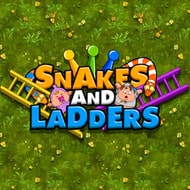
You’re three squares from a ladder that would put you halfway up the board, and the dice roll one number short — Snakes and Ladders has been handing players that exact moment of near-miss frustration for generations, and this version keeps the mechanic completely intact.
Snakes and Ladders here plays the same way the classic board version always has: roll, move your piece forward that many squares, and let whatever’s waiting on that square — a ladder climbing you forward or a snake dropping you back — decide whether the roll actually helped you.
There’s no decision-making layered on top of the roll — no choice of which piece to move, no optional risk to take. Every square’s outcome is fixed before the game even starts, so a player’s entire influence over a match begins and ends with what number comes up. That’s a deliberate simplicity rather than a missing feature; the tension comes purely from anticipation of the next roll.
Because there’s genuinely no skill input beyond rolling, groups tend to get more out of Snakes and Ladders as a fast, low-stakes round between other games than as something anyone sits down to master — a full match rarely takes long, and a bad roll is forgotten by the next turn.
Snakes and Ladders never asks for strategy, and that’s exactly the point — every square is already decided before the dice leave your hand, and the only real suspense is whether the next roll lands on a ladder or a snake.