Top GAMES

A Little to the Left

Become A Fashion Designer

Friday Night Funkin vs Hatsune Miku

The Choicer Voicer
VOTED GAME
The Choicer Voicer 2

Sharks and Minnows
Rooftop Snipers 2

Eye Catching FNF







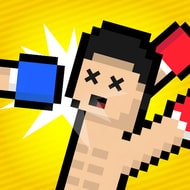
Boxing Random looks like a boxing game, with two stickmen squaring off in a ring and a knockout counter tracking the score. It does not play like one. There is no jab, no block, no footwork to master, just a single button that throws your entire ragdoll body forward and hopes for the best. What actually decides a match in Boxing Random has almost nothing to do with boxing technique and everything to do with reading the chaos of the current round.
Every action in Boxing Random comes from a single key. In single-player mode against the CPU, that key is the Up Arrow. In two-player mode, player one switches to W while player two keeps the Up Arrow, so both fighters can be controlled from the same keyboard. Pressing the key makes your stickman jump, swing its arms, and lunge forward all at once, which is closer to a punch-shaped flail than an actual jab.
Because there is no separate block or dodge input, defense in Boxing Random is really just timing your own swing so your body is not exposed when your opponent’s arm comes flying in. Landing a clean hit often has more to do with your ragdoll’s arm happening to connect on the way down than any deliberate aim.
This is where most new players misjudge the game. They treat the single button like a punch trigger to spam, when the ragdoll physics reward a well-timed single lunge over a flurry of mistimed jumps that just leave your fighter sprawled on the canvas.
The fighters in Boxing Random have no rigid skeletal structure the way a normal fighting game character does. Arms flop, torsos twist past where a real joint would stop, and a badly timed jump can send your boxer face-first into the mat before a punch even lands. That looseness is the entire identity of the game, not a bug players work around.
Rounds regularly change the ragdoll’s proportions on top of the physics. Some rounds hand both fighters unusually long necks or oversized heads that throw off your sense of reach, while others swap in rocket-powered gloves that send an opponent flying across the screen from a single connect. None of these modifiers are announced in advance, so the first punch of a new round is often the only clue you get.
Environments shift with the same randomness. A match can open in a plain ring, move to an icy field where footing barely exists, and finish on a tropical beach with sharks in the water behind the ropes, each surface changing how far a knocked-down fighter slides before getting back up.
Every so often a round in Boxing Random switches to what regular players call a pocket pouch round, where a knockout no longer requires hitting the head. In these rounds, a solid connect anywhere on the body counts as a knockout, which turns the entire fight into a scramble instead of a measured exchange.
Pocket pouch rounds are usually the fastest way to lose a lead you thought was safe. A fighter who was carefully lining up head shots suddenly gets knocked out by a stray hit to the torso, because the normal rules about where a punch needs to land simply do not apply for that round.
Recognizing a pocket pouch round early, usually from a visual shift in the ring or the fighters’ stance, is one of the few pieces of genuine skill that separates players who consistently win five-knockout matches from players who get caught off guard every time the mode appears.
A Boxing Random match ends the instant one fighter reaches five knockouts, and because the ring, the outfits, and sometimes the entire ruleset reset after every single knockout, a match rarely settles into a rhythm. Common outfit changes include business suits, plain shorts, and winter gear depending on which arena just loaded.
The failure point most players run into is over-committing on a jump the moment a new round starts, before they have seen whether it is a normal round or a pocket pouch round. Boxing Random punishes impatience far more than it punishes hesitation.
Things to watch for once a new round loads:
Solo players tend to use Boxing Random as a quick test against the CPU, trying to string together knockouts across as many random rounds as possible without getting caught by a pocket pouch round. This crowd treats each match almost like a gauntlet.
The two-player local crowd is where Boxing Random gets loudest, since sharing W and the Up Arrow on one keyboard turns a rocket-powered glove sending someone’s fighter flying off a beach ring into an instant, shared laugh. Neither player controls which modifier shows up, which levels the playing field regardless of skill.
A smaller group of returning players chases fast five-knockout wins, timing their single lunge as early as possible in each round and treating pocket pouch rounds as the moment where the whole match can flip in one connect.
That happens during a pocket pouch round, a special round type in Boxing Random where any solid hit lands as a knockout instead of requiring a shot to the head.
Boxing Random randomizes ragdoll proportions between rounds, occasionally giving fighters long necks, oversized heads, or rocket-powered gloves that change how far a punch sends an opponent flying.
Yes, player one uses W and player two uses the Up Arrow key, the same single-button scheme used against the CPU in single-player mode.
Boxing Random keeps score like a real fight, five knockouts and the match is over, but nothing about how those knockouts land stays consistent, whether it is a rocket-powered glove sending a fighter off a beach ring or a pocket pouch round turning a stray body shot into the winning blow. That gap between a familiar scoreboard and completely unpredictable rounds is what keeps players loading Boxing Random back up after a loss.